Signal Tribune: LBGCo-op is creating a community owned grocery store!
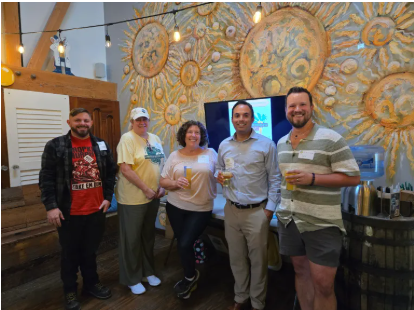
Cameron Hildreth, Sheila Anderzunas, Dodie Reddington, Arthur Flores, Levi Curtis-Switzer
bySamantha Diaz, Managing Editor
January 2, 2026
Running a business with 8,000 of your neighbors might sound like an impossible task, but for the Long Beach Grocery Co-op, it’s a goal they inch toward each day.
The cooperative has been stewing for over a decade, but has gained momentum over the last couple of years (currently nearing 1,000 owners) all with the same goal: to build a community grocery store stocked by local farmers, artisans and cooks. This year-round farmer’s market will boast only healthy, local produce grown by people in and around Long Beach, a few necessities from fair trade farmers, as well as salsas, sauces and more whipped up by home cooks — no big corporation logo in sight.
“We are literally a bunch of neighbors, friends, colleagues and strangers that just happen to live in the same city and all want the same thing,” said Dodie Reddington, vice president of the Long Beach Grocery Co-op. “It’s a long journey, but we’re going to get there because of that common denominator. We all believe in the same thing and we want to build it together.”
Grocery co-ops in the United States, a part of the earliest documented mutual aid groups, date back to the Free African Society, formed in 1787 by Black residents to aid people newly freed from slavery. In the 1800s, white and Black farmers created separate farmer co-ops to make joint purchases of tools, feed and equipment. It wasn’t until the 1900s that modern grocery co-ops saw a lasting impact.
Thrust into necessity by the Great Depression in the 1930s, both urban and rural cities began heavily relying on grocery co-ops as people struggled to purchase food and other essentials. Black-led co-ops used the same framework towards gas stations, credit associations and health insurance, and became a strong component of the Civil Rights Movement.
Today, there are thousands of grocery co-ops around the country, with hundreds of thousands of members, all with a desire for healthy, affordable foods that support their local economy. One such example is Santa Monica’s Co-Opportunity Market, founded in 1974 in the garage of George Tucker and now operating two locations.
Long Beach Grocery Co-op hopes for similar success, to be the “rising tide” that lifts residents into independence and out of corporate reliance, Reddington said.
“In this political climate that we are in, we as a community need something that we can wrap our arms around and feel like that we have control over something. Especially when people are feeling this economic inequality, that is real, this is truly an opportunity to not be at the mercy of billionaires and top corporations, that we can choose as a collective community to build it ourselves, do it ourselves and benefit from it ourselves.”
Dodie Reddington, vice president of Long Beach Grocery Co-Op
The co-op is currently looking for property vacancies to begin opening the first store. They also have a location along Anaheim Street earmarked and undergoing construction — about the size of Mother’s Market in Signal Hill — confident residents can support two co-op stores in a city of half a million.
In order to open the first store, the co-op estimates they’ll need about $4 million, or roughly 3% of Long Beach residents to become owners.
Long Beach Grocery Co-Op President Sheila Anderzunas said the combination of food access, economic growth and communal power prompted her to join the co-op about 11 years ago, becoming its fourth-ever member. In 2020, amidst the throws of the pandemic, a co-op meeting gave her hope not only for a return to normalcy, but for something better on the other side.
“To me, that’s what was exciting — we didn’t have to be victims of the pandemic, we could emerge from it and make our own decisions, create our own environment, one [where] we’re not dependent on a corporation or any other entity that could make or break us,” Anderzunas said. “We can build this economy here in Long Beach and have it support everybody, all along the supply chain, with food access to everyone.”
Especially for residents in Central, West and North Long Beach, areas the City has acknowledged have “limited access to nutritious foods,” a store with affordable, seasonal and locally-grown foods would be invaluable.
Long Beach Grocery Co-op’s six-member board of directors is a group from diverse backgrounds, from a drink and snack distributor and marketing consultant to the co-founder of Long Beach’s Primal Alchemy. The co-op will elect five more board members in January to expand operations.
When the president and vice president spoke to the Signal Tribune via Zoom on Dec. 5, they were celebrating their 971st owner, bringing them one step closer to opening the store. Each owner has committed $250 towards the co-op (either all at once or through a payment plan of $25 for 10 months), and won’t be asked to commit any more.
From here on, they’re an owner of the store once it opens, and will receive discounts on purchases and voting power for certain decisions, like which nonprofits and orgs to donate to. Reddington said the co-op will regularly make contributions back into the community through donations.
A critical part of Long Beach’s ecosystem has largely already bought into the idea: about 10% of the co-ops owners are vendors, home cooks and farmers. Many, if not all of them, will be stocking the store themselves with produce, unique handcrafted pieces, sauces, bread and much more.
Among the growers who have staked a claim of ownership include Long Beach Mushrooms, Farm Lot 59, Sowing Seeds of Change, Long Beach Community Compost and Organic Harvest Gardens. What they can’t stock from local farmers and cooks, they’ll get from fairtrade companies, ensuring the growers and suppliers are all paying their employees a living wage.
“They see an opportunity for a concept that will make shelf space for them, whereas they would never have that opportunity in a corporate store,” Reddington said of the local farmers and makers.
Those interested in becoming an owner of the Long Beach Grocery Co-op can learn more and sign up on their website longbeachgrocery.coop/.
Read Original Article Here
